
Curtains That Make the Room: Length, Fullness & Hanging Height, Explained
Too short, too skimpy, hung too low — most curtain disappointment is a measurement problem. Learn the three numbers designers swear by: rod height by the ceiling, hem length by the floor, and fullness by ratio.

Editor-in-Chief & Interior Stylist

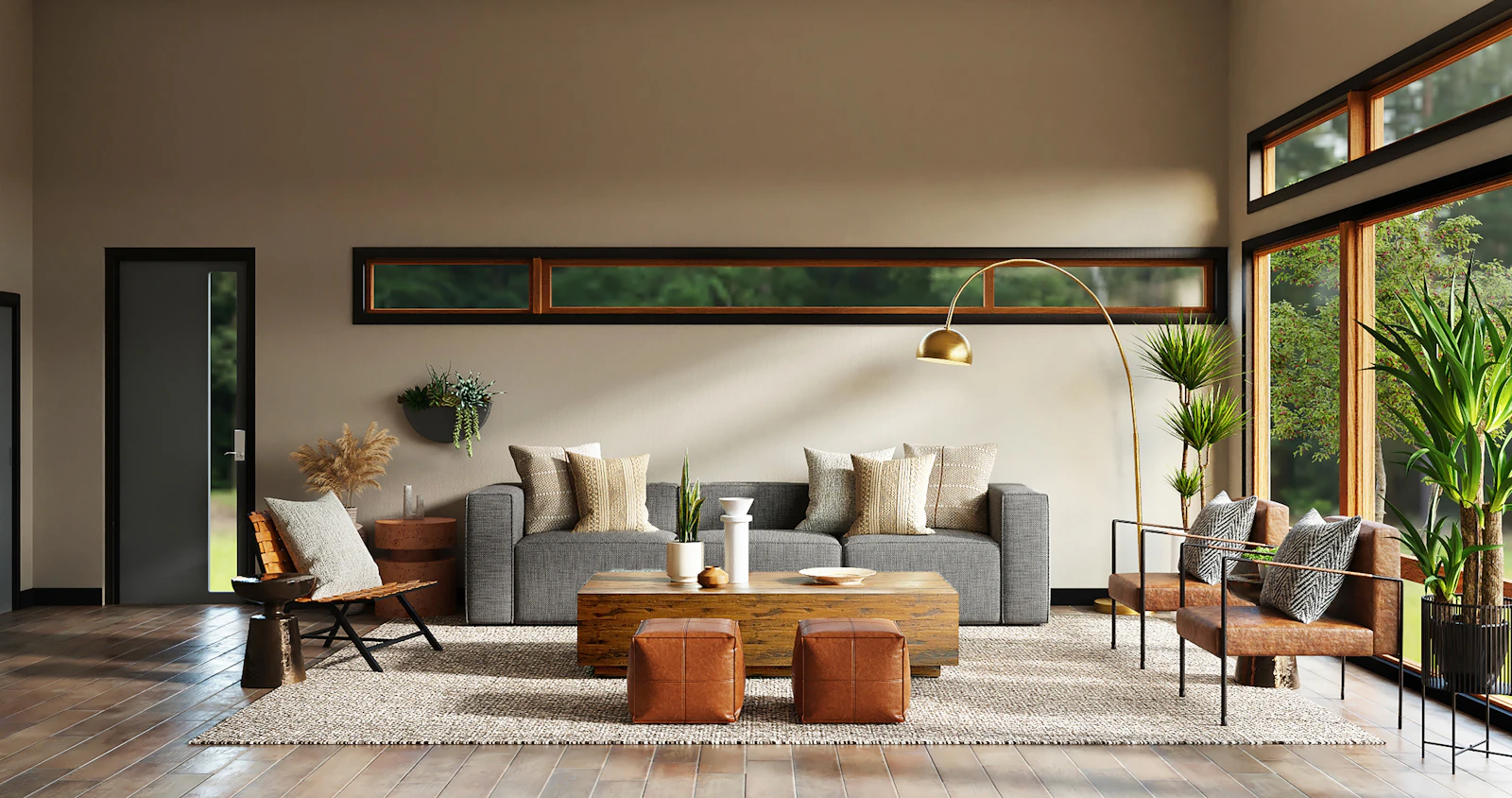
(Photo: Unsplash Editorial)
Curtains are the most common 'something feels off' culprit in an otherwise finished living room. The sofa is right, the rug is right — but the curtains hang a touch too short, a touch too skimpy, or a touch too low, and the whole room reads slightly apologetic. The encouraging truth is that curtain mistakes are measurement mistakes, and measurements can be fixed. Designers treat window treatments as architecture: they set the rod by the ceiling, the length by the floor, and the width by a fullness ratio, not by the width of the glass. Learn those three numbers and you will never buy the wrong panels again.
Rule One: Hang High — the Rod Belongs to the Ceiling
The most transformative curtain decision costs nothing: mount the rod as close to the ceiling as your trim allows, typically 2 to 4 inches below the ceiling or crown molding, and never less than 4 to 6 inches above the window frame. Hanging high does two things. It draws the eye up the room's full height, so an 8-foot ceiling reads taller, and it lets the fabric cover the top of the frame so the window itself appears larger. Extend the rod 8 to 12 inches beyond each side of the frame, too. That way, when the curtains are open, the panels stack back onto the wall — not onto the glass — and you keep every lumen of daylight you paid for. On a standard 36-inch window, that means a rod of about 52 to 60 inches, not 40.
Rule Two: Length Is a Relationship With the Floor
There are exactly three acceptable lengths, and 'somewhere in between' is not one of them.
The kiss (floor length)
The hem just grazes the floor — about half an inch above it. This is the tailored, modern standard: clean, practical, and forgiving of slightly uneven floors. Measure from the bottom of the rod (where the fabric will actually hang, accounting for rings, which drop panels another 1.5 to 2 inches) to the floor, then subtract half an inch.
The puddle (romantic length)
Add 1 to 3 inches for a gentle break, like a well-tailored trouser, or 4 to 6 inches for a true puddle in formal rooms and bedrooms. Puddles suit linen and other soft fabrics, low-traffic windows, and homes without robot vacuums or roaming toddlers. Be honest about which house you live in.
The float (apron length)
Ending 1 to 2 inches below the windowsill — or just above a radiator or deep baseboard — is correct for kitchens, baths, and windows with seating beneath. What no longer works anywhere is the old café-to-mid-wall length that stops halfway down a tall living room window; it visually chops the wall and dates the room instantly.
Rule Three: Fullness Is a Ratio, Not a Guess
Skimpy curtains look cheap even when they are not, because flat fabric reads as a bedsheet on a rod. Fullness is the ratio of fabric width to rod width, and the targets are simple:
- Ready-made panels: total panel width should equal 2 to 2.5 times the rod width. For a 60-inch rod, you want 120 to 150 inches of fabric across both panels — usually two pairs of standard 50-inch panels, not one.
- Sheers: 2.5 to 3 times, because translucent fabric needs density to glow rather than disappear.
- Heavy velvet or blackout: 1.5 to 2 times is enough; the fabric's body creates its own folds, and more becomes a wrestling match at the stack.
- The wave/ripplefold exception: custom wave curtains are engineered at roughly 1.8 to 2.2 times with fabric snapped to a track — if you are quoted wildly different numbers, ask why.
Budget honestly around this ratio: mid-range linen-look panels in the generous lengths (96 to 108 inches) run about $35 to $70 per panel, and most living room windows need four panels to look full. A correctly filled window at $200 will outperform a $400 window of skimpy silk every time.
Measure in this order: (1) Decide rod height — near the ceiling. (2) Decide rod width — frame width plus 16 to 24 inches total. (3) Measure drop from rod to floor and pick your length style. (4) Multiply rod width by your fullness ratio to get total fabric width. (5) Then, and only then, shop. Panels are sold by length first — 84 inches suits 8-foot ceilings hung conventionally, but high-hung rods usually need 96 or 108.
Hardware and Fabric Notes That Matter
Choose a rod diameter of at least 1 inch for living rooms — skinny rods bow under full panels and cheapen the whole effect — and match finials to the room's other metals loosely, not obsessively. For fabric, linen and linen blends are the modern default for a reason: they filter light beautifully, hang in soft columns, and their natural slub hides wrinkles that would scream on sateen. Cotton canvas gives a crisper, more structured pleat; velvet is unmatched for media rooms and winter coziness but demands the stack space of Rule One. If privacy matters at night, pair sheers on a double rod with heavier panels rather than asking one layer to do two jobs.
Five Mistakes We See Everywhere
- The rod squeezed just above the frame, shrinking the window and the wall in one move.
- 'Hover curtains' ending 2 to 4 inches above the floor — neither tailored nor puddled, just short.
- One pair of panels on a wide window, stretched drum-flat when closed, so the room gets either darkness or exposure and nothing in between.
- Forgetting the rings in the measurement — clip rings drop the panel about 2 inches; that is the difference between a kiss and a hover.
- Grommet panels on a formal brief (or pinch pleats in a casual one): header style is the curtain's dress code — pinch pleat and wave read tailored, grommet and rod pocket read relaxed.
Measure Twice, Admire Daily
Of everything in a living room, curtains occupy the most vertical square footage for the least money per foot — which is why they either elevate the room or quietly undermine it. Hang the rod by the ceiling, let the hem commit to the floor, and buy fabric by ratio instead of by the pair. Do those three things and the windows stop being holes in the wall and start being what they were always meant to be: the room's architecture, dressed.
Shop The Look • Hand-Selected Room Pieces
 Best SellerTarget
Manage inventory, stock, sales, purchases, suppliers and business reports with MBI Inventra. Smart inventory management and POS software for pharmacies, wholesalers and retailers.
* The Decor Diary editors independently select all featured products. We may earn an affiliate commission on qualifying purchases made through our verified merchant links.
Editorial Standards & Fact-Checking
This guide was researched, written, and verified in accordance with The Decor Diary’s editorial principles. We test room solutions for practicality, longevity, and sustainability.
Read our full editorial workflow →Written by Elena Vance
Editor-in-Chief & Interior Stylist
Elena Vance has over twelve years of experience in interior architectural design and editorial styling. Her philosophy centers on organic minimalism, textural layering, and making residential spaces effortlessly tranquil.
View all articles by this author →Community Conversation (0)
Share Your Thoughts
Have a question about this decor layout or a tip of your own? We welcome civil, thoughtful discussion.
Related Design Stories

Beautiful Balcony Decor Ideas for a Relaxing Outdoor Space
Transform your balcony into a cozy and relaxing retreat with beautiful plants, comfortable seating, and warm lighting. These simple decor ideas are perfect for creating a stylish outdoor space.

15 Cozy Boho Reading Nook Ideas to Create a Relaxing Corner
Create a cozy reading corner with warm lighting, indoor plants, comfortable seating, and beautiful boho decor.
Styling the Perfect Editorial Bookshelf: Proportion Rules, Art Vignettes, and Negative Space
The difference between a styled shelf and a storage shelf is rhythm, weight, and breathing room. Learn the 60/40 rule, horizontal stacks, leaned art, and the editor's step-by-step workflow.